If it has only now let you go and your heart is still going hard, what you've been through is called sleep paralysis. You're aware but can't move your body, though your eyes still move and you breathe as usual1. Sleep studies trace it to REM sleep's stillness carrying on into waking1.
An episode, or even a few, isn't narcolepsy on its own. If you were frightened, so were most people in the studies that asked, and a sense of someone in the room is one of the commonest things they describe1. About eight in every hundred people have had at least one episode1, while narcolepsy affects somewhere around one person in two thousand345.
What matters is whether it comes with other things, by day as well as by night. Narcolepsy is a brain condition in which the cells that keep sleep and waking steady are lost or fail46, so sleep keeps turning up where it doesn't belong. The useful question, then, is where in your life sleep breaks in. It might be a sleepiness that overtakes you in the middle of the day even after a full night, a moment of going weak when you laugh, or dreams that linger as you wake on the days that sleepiness won't lift.
-
If you've woken from sleep paralysis and the rest doesn't sound like you
Then what you had is most likely the common kind, the one that turns up more after short or broken nights, travel and sleeping on your back1. If it keeps coming back and you'd like to know why, it's a fair thing to raise with a doctor on an ordinary day, and there's nothing you need to do about it tonight.
-
If you're short of sleep: a new baby, night shifts, nights lying awake
Your sleepiness most likely has a plainer explanation. Short sleep and night shifts can look like narcolepsy, even on the sleep tests78. How much sleep do I really need?, Do I have insomnia? and How do I sleep well on night shifts? are closer to what you're living with.
-
If you give sleep its full time and are still overcome by it in the day
Then the signs below are the ones to read closely. Commoner causes, such as sleep apnea, come first to rule out. Why am I still tired after a full night's sleep? and Do I have sleep apnea? go into those.
How is narcolepsy different from being very tired?
You'll know the tiredness after a late night: you yawn your way through the next day, and a proper sleep puts it right. What people with narcolepsy live with is something else: sleep that breaks into the day however full the night before has been.
Through every day and night the brain moves between three states: waking, ordinary sleep and REM sleep, the stage of vivid dreams when most of the body's muscles go slack. In most of us the borders between them stay put. A small cluster of cells deep in the brain helps keep them that way by making orexin, which keeps wakefulness going and also feeds the pathway that links strong happy feelings with muscle control and REM sleep56.
As researchers understand the system, when those cells are lost pieces of REM sleep break loose into waking56. The slackness of the muscles arrives in the middle of a laugh, which is cataplexy. Dream images turn up at the edges of sleep, as you drift off or come round, and the paralysis lingers after the mind has woken. Going the other way, wakefulness breaks into the night. That's why signs that look so different turn out to belong together.
The upper map shows the three states with their borders holding, and the lower shows the same map as it's understood in narcolepsy type 1, where pieces of REM sleep break loose into waking56. Each track runs from the ring, where a sign belongs, to the dot where it turns up.
Drawn as an illustration of the pattern
See this as a table
| State | Name |
|---|---|
| Waking | Awake |
| Non-REM sleep | Ordinary sleep |
| REM sleep | REM sleep |
| Map | The borders |
|---|---|
| In most people | Each state keeps to its own |
| In narcolepsy type 1 | Pieces of one state turn up in another |
| Sign | What it is | Belongs to | Turns up in |
|---|---|---|---|
| Sleep attacks | Sleep itself, overtaking the waking day | Ordinary sleep | Awake |
| Cataplexy | REM’s slack muscles, in the middle of a laugh | REM sleep | Awake |
| Dreams at sleep's edges | REM’s dream images, drifting off or coming round | REM sleep | Awake |
| Sleep paralysis | REM’s stillness, after the mind has woken | REM sleep | Awake |
| Broken nights | Waking, breaking into the night | Awake | Ordinary sleep |
A small study from 1994 shows the shape of it. Researchers followed twenty-four people with narcolepsy through ordinary days at home and at work, each matched with someone without it. Over twenty-four hours the two groups slept about the same in total9. So where did the narcolepsy group's sleep go? The people with narcolepsy had more broken nights, and in the day they slept an average of forty-four minutes, against under five for the others9. Their sleep hadn't grown in total. Some of it had slipped out of the night and into the hours of the day, which may be why an early night does so little. It's a single small study, of people already on treatment, though the broken nights it found are what sleep clinics see too10.
Doctors describe two types: in type 1 the sleepiness comes with cataplexy, and in type 2 the same symptoms come without it46. Most of what's known about the lost cells comes from type 1, and type 2 is less well understood45.
What does the sleepiness feel like?
People who live with it describe a sleepiness that comes over them like a wave. In interviews in Slovakia, twenty-five people with narcolepsy spoke of11 microsleeps and of shutting off, sometimes after a warning like grit in the eyes11. They fell asleep on the bus and at the bus stop, in waiting rooms and even in the middle of a meal11, and the people around them often read the swings in their energy as laziness11.
Fighting it can leave someone going through the motions without really being there. Up to forty percent of people with narcolepsy have automatic behavior, carrying on with cooking, writing or a phone call with little awareness and little memory afterwards511. Notes taken in class can turn out, later, to be scribbles11. If any of this sounds like your own days, you could note down when and where it happens, ready for a doctor.
A short nap can be strangely restoring. Why would twenty minutes do what a whole night couldn't? The research describes it more than it explains it. In narcolepsy a nap classically leaves people refreshed, at least for a while1112. In idiopathic hypersomnia, a different condition, people more often wake groggy and confused, though some people with narcolepsy wake groggy too1112. So tell your doctor how naps leave you, and they'll put it together with everything else.
Please don't drive when you feel sleepy, because sleep can arrive with little warning, and people with narcolepsy and related conditions reported about twice the odds of a crash in the previous five years13. If sleepiness starts to come over you at the wheel, please pull over somewhere safe and stop. Driving is something to bring up with your doctor too.
What is cataplexy, and how would I know?
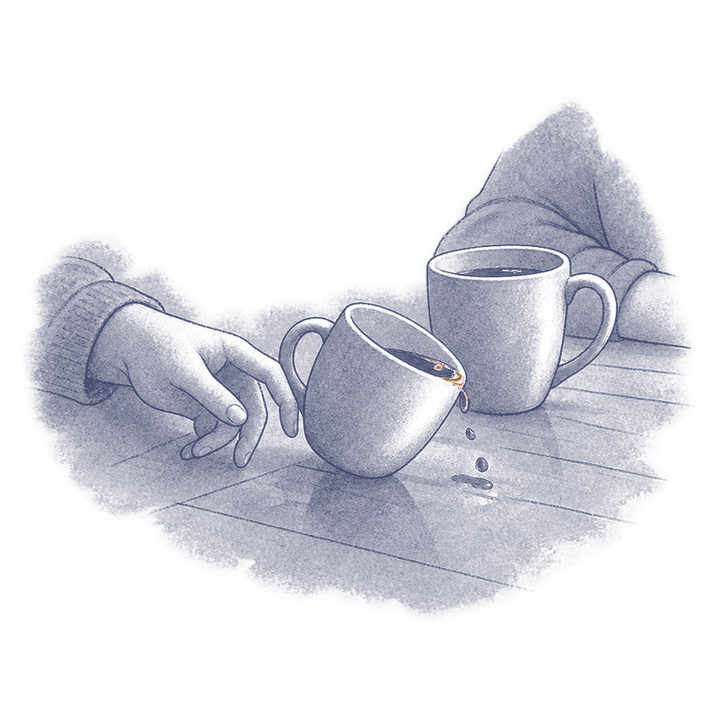
Perhaps it has happened to you at a kitchen table, or you've watched it happen to someone else: a jaw that drops at the punchline, a head that nods, a cup that slips from the hand. That's what cataplexy often looks like. It's a sudden loss of muscle strength while you're awake, set off by a strong feeling, most often a happy one, and you stay conscious all the way through51114. It usually affects only part of the body, the face, head, neck, hands or legs, and only rarely becomes a full collapse51114.
One of the people in the Slovak interviews was a physician, and she felt her knees give way whenever patients joked on her ward rounds11. A big, excited laugh sets it off far more readily than an ordinary one. Anger can do it too, or running unexpectedly into someone you know, and many people have attacks with no obvious trigger at all14. Over time, some people learn to hold their feelings back to keep the attacks away11.
If you're the partner or parent watching, you may be the first to see the jaw go slack at a joke. A short video on your phone can help a specialist see what you've seen15.
Cataplexy is found only in narcolepsy type 1511, which is why it counts for so much with a doctor. If you're sleepy now and it hasn't happened to you, that can't tell you either way, because the sleepiness usually comes first. At one Austrian sleep center, cataplexy had come before the sleepiness in fewer than one patient in twenty10.
What about the dreams and the broken nights?
Perhaps you've seen pictures float up as you drifted off, or lain awake through nights that kept breaking. Pictures as you fall asleep are called hypnagogia, and more than a third of people in a large UK survey had had them16, far more than narcolepsy could account for. Fewer, about one in eight, had them as they woke16. In narcolepsy, pictures at either edge of sleep belong to the same leak of dreaming into waking. Images on waking, in someone who is also very sleepy by day, may be the better pointer16.
The nights themselves are often broken. People who live with it describe nights crowded with vivid dreams and nightmares, sleep paralysis and hallucinations11. At one Austrian sleep center, the night study showed fragmented sleep in sixty-eight of a hundred patients, and twenty-eight had insomnia as well10. So you can lie awake half the night and still spend the next day fighting sleep.
Why does it so often take years to find out?
If you've been told you're lazy, or bored, or that more sleep is all you need, and come halfway to believing it, that's the story many people with narcolepsy tell about the years before they knew. It often begins young, usually in the teens or early twenties, though it can start at any age51017.
The years go by mostly because the signs go unrecognized, and narcolepsy is often first mistaken for something else, with depression a common wrong label518. Depression is also more common in people with narcolepsy5, so the two can come together. At France's national reference center, half the people with type 1 waited four years or more for a diagnosis17, though those waits have been growing shorter17.
A closer look Why do the orexin cells disappear?
Researchers have established that the cells are lost in type 1. In a small study of brains examined after death, eighty-five to ninety-five percent of the orexin cells were missing in people who had had narcolepsy. The cells mixed in among them were not reduced19, and later work found orexin missing from the spinal fluid510. Why they're lost isn't known for certain. Most experts think the immune system attacks them in people with a particular inherited immune type, HLA-DQB1*06:02, which is found in more than ninety-eight percent of people with type 1245. That immune type is also common in the general population, carried by somewhere between twelve and thirty percent of people5, so having it doesn't mean narcolepsy.
The other clue comes from the 2009 to 2010 swine flu vaccination campaign. One vaccine, Pandemrix, raised the risk of narcolepsy in the following year five to fourteen times in children and teenagers and two to seven times in adults, about one extra case for every 18,400 doses in young people20. Those figures come from observational studies, and the authors of the review that pooled them judged that the benefits of the vaccination outweighed this rare risk20. Together the two clues point toward the immune system. No one has yet shown exactly how it does the damage, so for now the immune explanation is a strong suspicion that hasn't been proven.
What would I say to a doctor, and what happens then?
What the doctor most needs to hear is the daytime sleep that comes despite full nights: where it catches you and how often. Mention, too, whether your face, neck or knees ever go weak when you laugh or feel something strongly. If you've already been told it's tiredness or low mood, the diary gives the doctor something firmer to go on.
If the pattern fits, you'll usually be referred to a sleep specialist. For the two weeks before the tests, you keep the sleep diary, often wear a wrist activity monitor, and give yourself enough sleep, ideally at least seven hours a night8. That matters because short or irregular sleep can skew the results8.
Your doctor will plan with you which medicines to stop beforehand, and for how long, usually at least two weeks for those that affect alertness, sleepiness or REM sleep8. Some medicines can't safely be stopped, and stopping some suddenly causes trouble of its own, so please don't stop anything on your own8. You taper off caffeine too, and on the day you avoid alcohol, caffeine and cannabis8.
The tests come on two days in a row. First you spend a night in a sleep lab, and the study also looks for other problems such as sleep apnea. Untreated severe apnea can itself bring on early REM in the nap test, so your doctor treats it first8. The next day comes the nap test: five chances to nap, twenty minutes each, two hours apart, in a dark room, with you out of bed and awake in between8. The specialist is watching how quickly you fall asleep and whether you slip into REM sleep early.
The specialist reads the result alongside your story. Orexin can be measured in spinal fluid, though that isn't routine58. The specialist will also think of rarer conditions that cause heavy daytime sleepiness, such as idiopathic hypersomnia1721.
A closer look What counts as a positive nap test?
The diagnosis rests on the symptoms together with the tests. On the nap test, that means falling asleep in eight minutes or less on average, with REM sleep starting within fifteen minutes of falling asleep in at least two of the naps, and a REM period early in the night study can count as one of them; low orexin in the spinal fluid is the other route56. If the nap test is negative but cataplexy is clear, a doctor may repeat it or measure orexin58.
In people with untreated narcolepsy the pattern is usually clear. At the Austrian center, eighty-seven untreated patients fell asleep in a median of two and a half minutes across the naps and went into REM in a median of four naps out of five10. What happens when ordinary adults take the same test? In the Wisconsin study, 1,135 adults from the community did. Twenty-two percent fell asleep in eight minutes or less on average7, fast enough to cross the line. A smaller group went further. Early REM in two or more naps turned up in seven percent7, and 3.4 percent matched the full narcolepsy pattern, a result linked most strongly with shift work and, less strongly, with short sleep7. Yet such results often didn't repeat when people were tested again7. That's what the weeks of steady sleep beforehand protect you from. It's also why a doctor reads your numbers against everything else you've told them.
Can it be treated?
It can, and for most people it works25621. A specialist chooses the medicines, which keep you awake or prevent cataplexy, and adjusts them as you go221. There isn't a cure yet56, so the care goes on for years.
Part of it can look quite ordinary. In one small trial, twenty-nine people already on medicine tried different daily routines for two weeks. Of those routines, only the one with regular bedtimes and two fifteen-minute naps a day cut both their symptoms and the sleep that overtook them by day. It helped most those who had stayed very sleepy despite their medicine422. The European guideline rates scheduled naps strongly2, though the trials behind them are few and small. Are naps good for you? has more on napping in general.
Perhaps you're wondering how naps and fixed bedtimes would fit around a job. One Austrian clinic asked its patients about work, and most of those asked had a regular job. Some had chosen or changed their work to fit their narcolepsy10.
What the research says
- A single episode of sleep paralysis is common, and on its own it isn't narcolepsy. Well established
- In narcolepsy type 1, most of the brain's orexin cells are lost. Well established
- Most experts think the immune system destroys the orexin cells, though this hasn't been proven. Good evidence
- Cataplexy, sudden weakness with laughter or strong feeling while staying aware, is found only in narcolepsy type 1, and is usually partial. Well established
- People with narcolepsy may sleep no more in total than others, with their sleep spread into the day; this rests on one small study. Early evidence
- Diagnosis rests on symptoms plus an overnight study and a daytime nap test, after two weeks of enough sleep. Well established
- A short nap test result on its own can mislead, especially in shift workers and people short of sleep. Good evidence
- Type 2 is less well understood: it may involve a smaller loss of orexin cells, some people later develop cataplexy, and in a quarter to half the sleepiness eases on its own. Not well studied yet
- Scheduled naps and medicines prescribed by a specialist help most people. Well established
Much of what's known about the signs comes from people seen at specialist sleep centers, who may have clearer symptoms than everyone with narcolepsy, and the figures for type 1 and type 2 differ.
Questions people ask
I've had sleep paralysis a few times. Should I worry?
On its own it's common, since about eight in every hundred people have had it at least once1, and it turns up more with short or broken sleep, shift work and sleeping on your back1. A doctor will want to hear about it if it comes with heavy daytime sleepiness or moments of going weak when you laugh.
My teenager keeps falling asleep in class. Could it be narcolepsy?
It can begin at that age: onset most often falls between 10 and 20 in type 1, and between 15 and 20 in type 217. If the sleepiness goes on despite enough sleep, it's time to see a doctor. Short or irregular sleep can look like narcolepsy on the tests78, so a two-week sleep diary is a good start. Why can't my teenager fall asleep before midnight? covers the late nights of the teenage years.
I lie awake at night too. Doesn't that rule it out?
No. Broken nights are common in narcolepsy, and in one clinic twenty-eight of a hundred patients also had insomnia10. When you see a doctor, mention both.
Will I be able to work and drive?
Many people with narcolepsy work, and some shape or change their jobs to fit it10. Your specialist will talk through driving with you.
Where do I start?
Most people who search the word in the night have met something commoner and plainer. For the few whose days really are being broken into by sleep, the pieces now have a shape: a sleepiness that comes like a wave, knees or a jaw that may give at a joke, dream images that linger as you wake, nights that keep breaking.
If that's you, you could start the diary tomorrow, and in two weeks you'll have something to put on the doctor's desk. Then you can say it in your own plain words: I get enough sleep, and I still fall asleep in the day when I don't mean to.
Come, blessed barrier betwixt day and day, Dear mother of fresh thoughts and joyous health!